

SEC Finally Admits Crypto Isn’t Going Away — Here’s Their 5-Year Plan
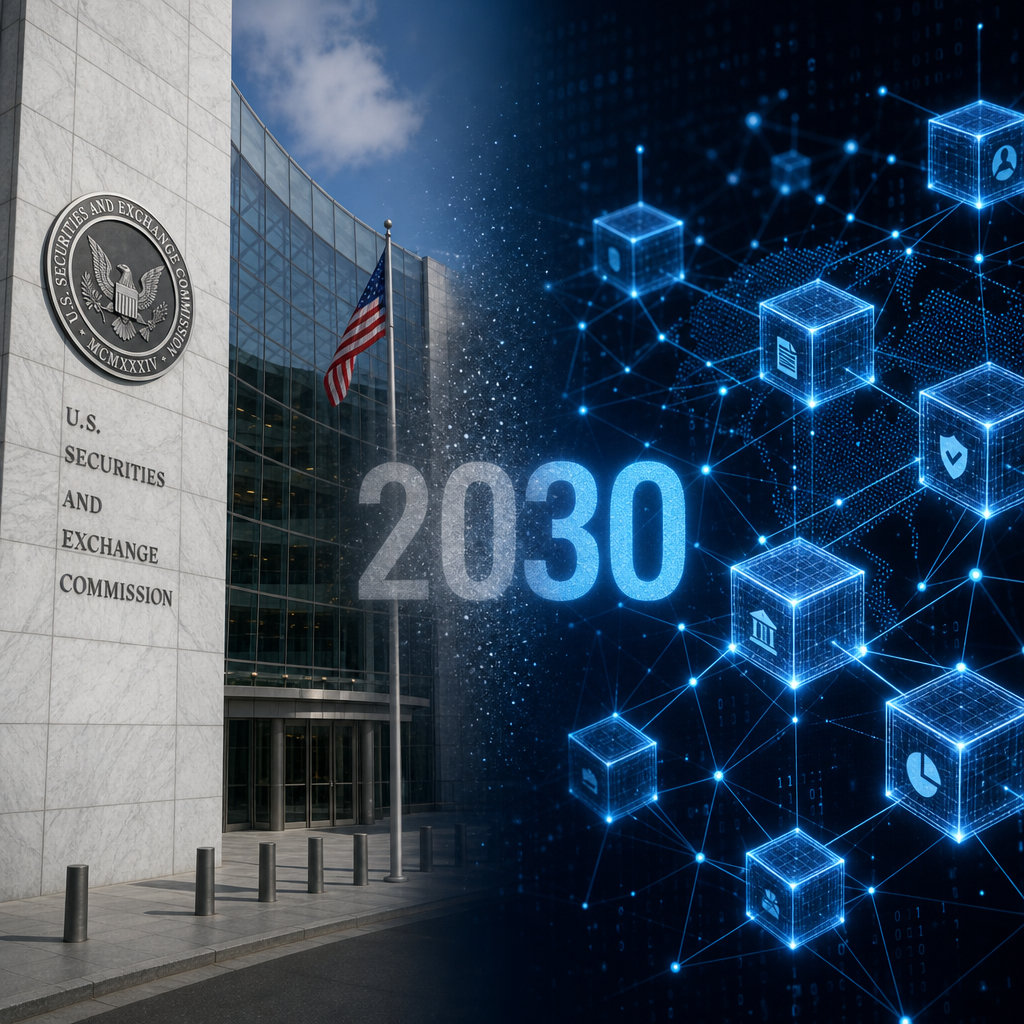
The U.S. Securities and Exchange Commission just published a five-year strategic plan that, for the first time, explicitly puts digital assets front and center. Not as an enforcement headache. As a strategic priority. That’s not nothing.
The regulator’s roadmap through 2030 calls for clearer crypto rules, active support for tokenization, and a formal framework for staking and onchain markets. Coming from an agency that’s spent the last several years suing nearly every major crypto project in sight, this feels like a pivot — or at least a grudging acknowledgment that blockchain stuff isn’t a fad.
The core development — what happened
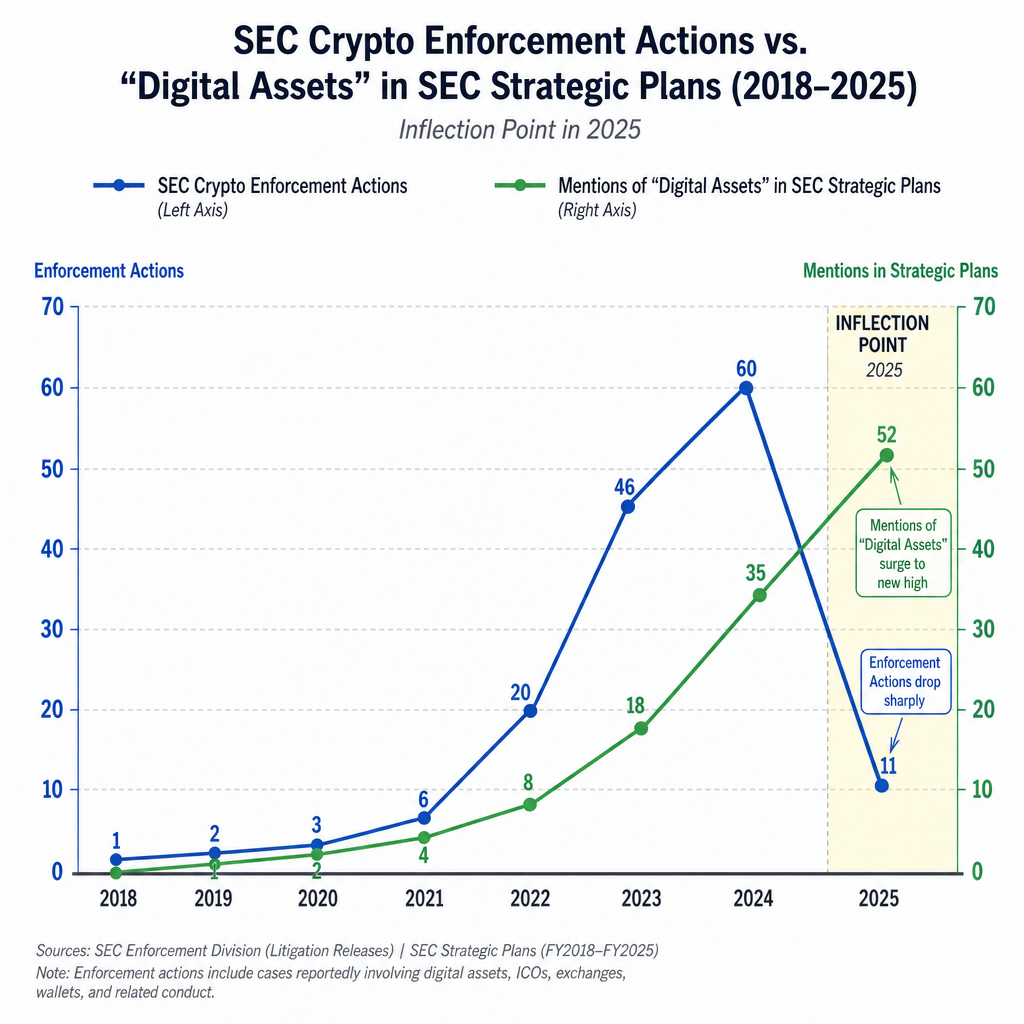
Let’s be real: the SEC and crypto have had a toxic relationship. For years, Chair Gary Gensler’s SEC treated digital assets like an invasive species — something to be contained, prosecuted, and ideally, starved of oxygen. But buried in the agency’s newly released strategic plan for fiscal years 2026–2030 is a quiet bombshell.
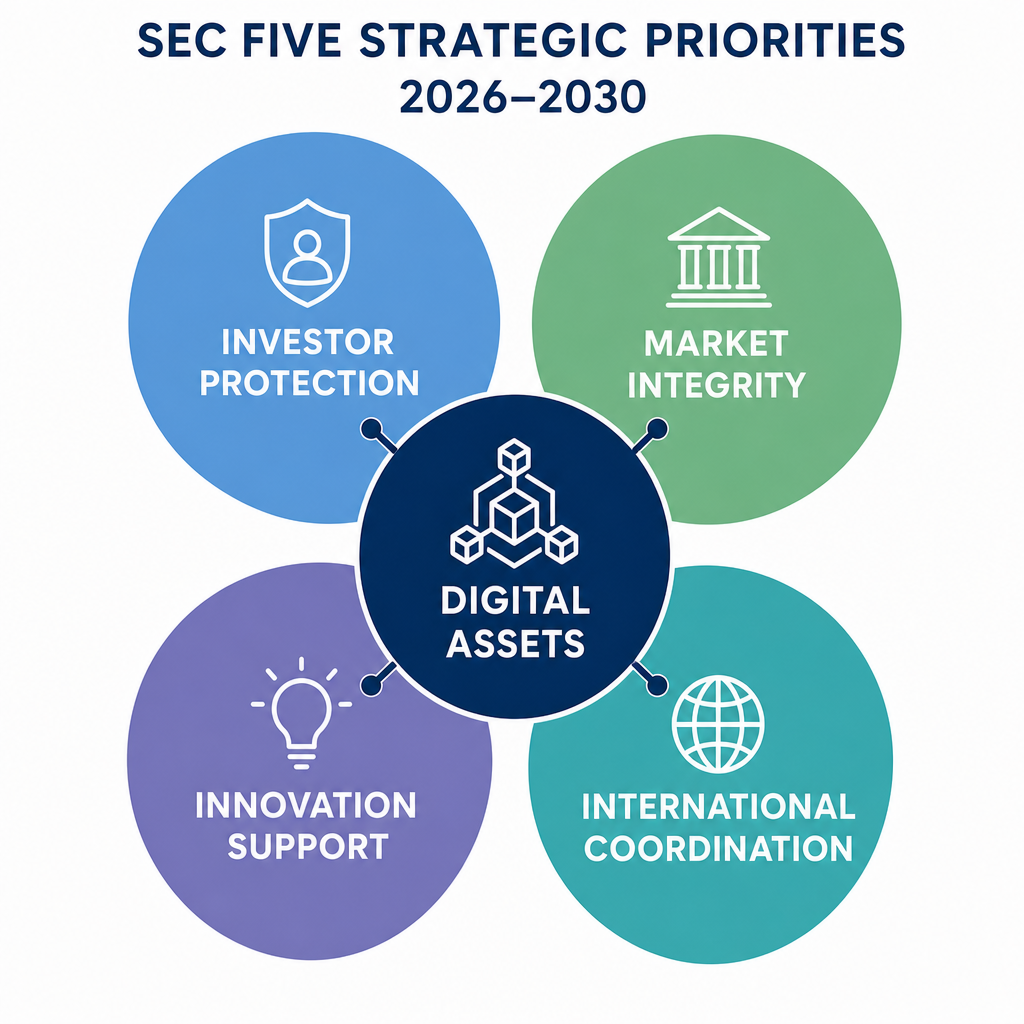
The document lists “digital assets” as one of five core strategic priorities. It commits to “providing regulatory clarity” for crypto markets, supporting “the development of tokenized securities,” and building out “a framework for staking and onchain market activities.”
That last one’s wild. Staking. The SEC spent most of 2023 suing Kraken over its staking product and threatening Coinbase over theirs. Now they want to write rules for it?
“We’re not trying to ban innovation,” a senior SEC official told reporters during a briefing on the plan, speaking on condition of anonymity. “We’re trying to build a regulatory framework that works for both investors and markets.”
Why it matters — market or regulatory impact
Here’s my take after eight years watching this circus: the SEC is finally reading the room. Not because they love crypto — but because they’ve realized that fighting it endlessly makes them look like the old guy yelling at clouds. Meanwhile, Europe’s MiCA is live. Singapore’s regulators are issuing licenses. The UK is building a sandbox. The U.S. was becoming a crypto backwater, and that’s bad for American capital markets.
Tokenization is the real story here. The SEC’s plan explicitly calls out supporting “the development of tokenized securities.” That’s not about Dogecoin or JPEGs. That’s about BlackRock, JPMorgan, and every major bank in America wanting to put bonds, real estate, and private equity on blockchain rails. When the SEC starts talking about making that easier, you know the lobbying dollars have landed.
But don’t get it twisted. This isn’t a free pass. The plan also emphasizes “investor protection” and “market integrity” — code for: we’re still going to come after you if you screw up. The question is whether “clearer rules” actually materializes, or if we get more of the same regulation-by-enforcement dressed up in strategic-plan language.
What analysts / experts are saying
Industry reaction has been cautiously optimistic — which in crypto terms means nobody’s throwing a chair yet.
Jake Chervinsky, chief legal officer at Variant Fund, called the plan “a meaningful departure from the last few years” on X. He noted that including staking and onchain markets in a regulatory framework signals the SEC is finally engaging with how crypto actually works, not just how it looks on paper.
“This is the first time I’ve seen the SEC acknowledge that staking isn’t just a security — it’s an infrastructure function that needs its own rules,” Chervinsky posted. “Big if real.”
Carolyn Wright, a former SEC attorney now in private practice, was more measured. “Plans are plans. Execution is everything,” she told me. “I’ve seen three different SEC chairs promise ‘clarity’ on crypto. The difference this time is the market pressure — institutions are demanding rules, not lawsuits.”
The Tokenization Institute’s director of policy, Marcus Delgado, pointed to the timeline. “2030 is far enough away that they can punt tough decisions, but close enough that they actually have to start drafting. The real test comes in 2026 when they publish proposed rules.”
What to watch next
The SEC’s plan is just that — a plan. The rubber meets the road when proposed rulemaking starts, likely late 2025 or early 2026. If the agency actually publishes a staking framework that distinguishes between protocol-level staking and custodial staking services, that’s a massive deal for Ethereum and Solana validators.
Also watch for the tokenization piece. If the SEC creates a streamlined path for issuing tokenized securities — think bonds, funds, or real estate tokens — you’ll see a flood of traditional finance products hitting onchain within months. If they drag their feet, expect more companies to incorporate in Singapore or the UAE.
One thing I’m certain of: the enforcement-heavy era isn’t dead yet. But it’s on notice. If this plan is real, the SEC is signaling they want to be a regulator, not a prosecutor. If it’s just PR, we’ll know by mid-2026 when the next lawsuit lands on a major exchange.
Key Takeaways
- The SEC’s 2026–2030 strategic plan lists digital assets as a core priority for the first time, signaling a shift from pure enforcement toward rulemaking.
- The agency explicitly commits to developing a framework for staking and onchain markets — a reversal from recent lawsuits targeting those exact activities.
- Tokenization of securities gets a formal endorsement, aligning the SEC with Wall Street’s push to put traditional assets on blockchain rails.
- Industry experts are cautiously optimistic but warn that execution matters more than language — watch for actual proposed rules in late 2025 or early 2026.