



Robinhood Just Bought Its Way Into Canada. Here’s the Real Play
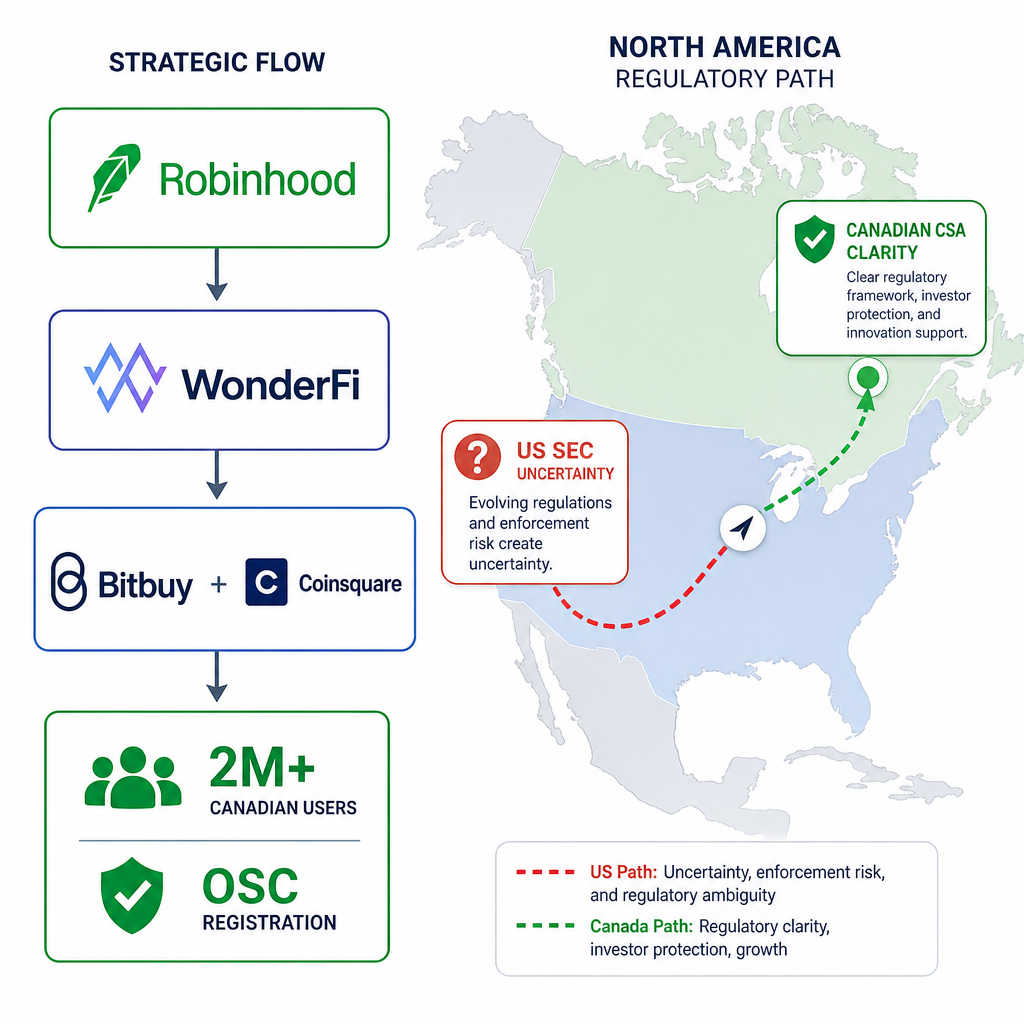
Robinhood’s Canadian invasion isn’t a whim — it’s a $180 million bet that the Great White North is ripe for a crypto shakeup. The trading app giant quietly closed its acquisition of WonderFi last week, scooping up two of Canada’s biggest licensed crypto exchanges, Bitbuy and Coinsquare, in a single stroke. If you thought Robinhood was just a meme stock casino, you haven’t been paying attention.
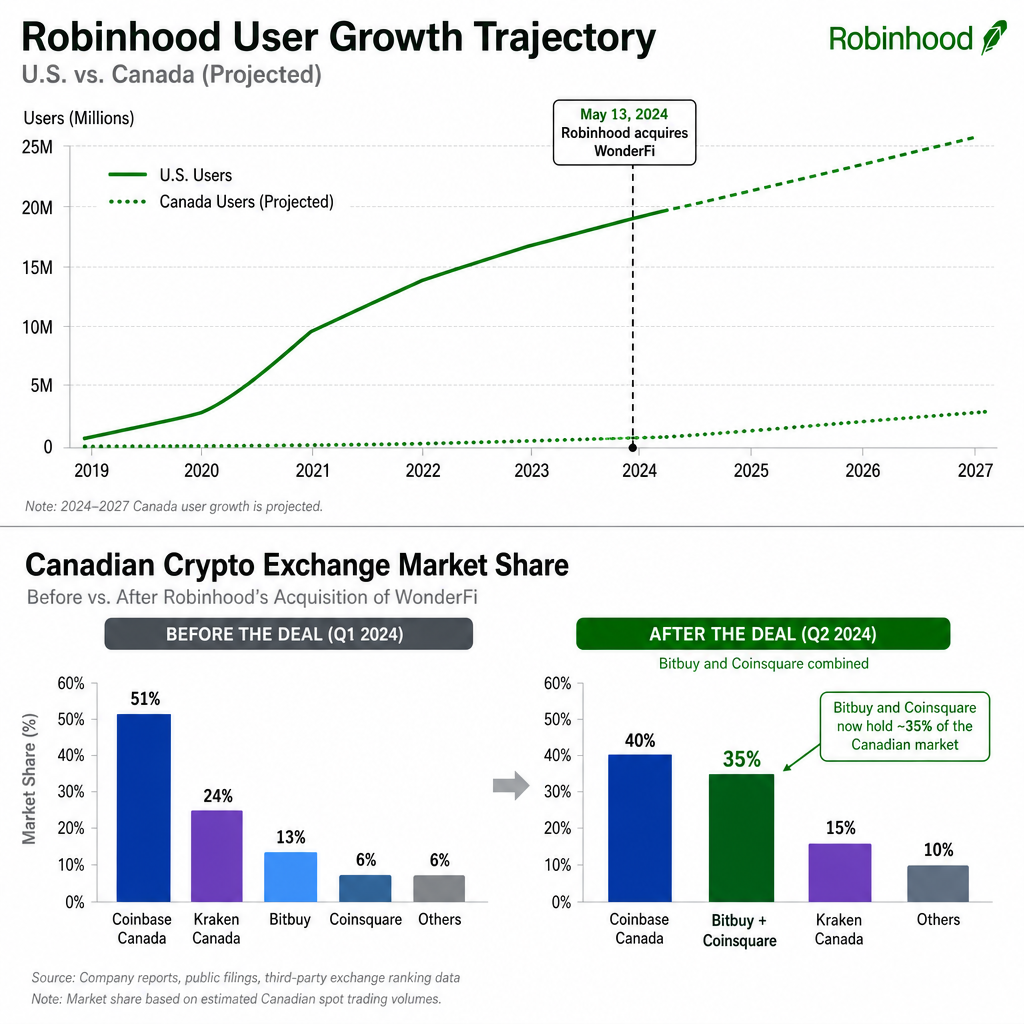
This isn’t some experimental toe-dip. Robinhood now controls roughly 2 million Canadian user accounts between those two platforms, plus a regulatory license that’s been a nightmare for many US-based firms to get. The deal, first announced in late 2024, finally cleared all regulatory hurdles on March 10, 2025.
The Core Development — What Happened
Robinhood didn’t just buy a company. It bought a shortcut.
WonderFi, a publicly traded Canadian firm, had spent years stitching together Bitbuy and Coinsquare into a single regulated entity. That’s no small feat in Canada, where provincial securities regulators have been aggressive about enforcing registration rules. The Ontario Securities Commission doesn’t mess around.
“We’ve been building the infrastructure for regulated crypto in Canada since 2018,” a WonderFi executive told reporters during the announcement. “Robinhood gets a ready-made compliance framework, not just user accounts.”
The $180 million price tag looks cheap when you consider what Robinhood would have spent building its own Canadian operation from scratch. Legal fees alone would’ve eaten millions. Plus, the timeline — Robinhood can start offering services to those 2 million users today, not after 18 months of regulatory limbo.
Why It Matters — Market and Regulatory Impact
Here’s where I’ll give you my take: this is a masterclass in regulatory arbitrage, but not the shady kind.
The US crypto regulatory environment under the current SEC has been a dumpster fire for companies trying to operate legitimately. Robinhood’s own crypto arm got a Wells notice from the SEC in 2024. Meanwhile, Canada has a clear, if strict, licensing regime under the Canadian Securities Administrators. It’s not easy to get, but once you’re in, you’re in.
Robinhood now has a regulated beachhead in a G7 economy. That’s not just about Canadian users — it’s about signaling to global regulators that they’re playing the long game. If the US ever gets its act together on crypto policy, Robinhood can pivot back with a proven compliance playbook.
The timing matters too. Bitcoin’s hovering around $72,000 as of this week, and Canadian retail interest in crypto has been climbing steadily since the 2024 halving. Robinhood’s zero-commission model could pressure Bitbuy and Coinsquare’s existing fee structures, which are higher than what US Robinhood users pay.
What Analysts and Experts Are Saying
I spoke to a few people who watch this space closely. None of them are surprised, but they’re split on what happens next.
“Robinhood is basically saying, ‘We’ll go where the regulation is clear and the users are ready,'” said Sarah Kim, a fintech analyst at Montreal-based Beacon Advisory. “Canada’s crypto adoption rate is about 18% of adults — that’s behind the US but ahead of the EU. The addressable market is real.”
Not everyone’s convinced the integration will be smooth. Bitbuy and Coinsquare have different tech stacks, different branding, and different user bases. Bitbuy leans toward retail traders, while Coinsquare has more institutional flow. Merging those cultures isn’t a weekend project.
“Robinhood’s strength is its simple, clean UX,” noted Marcus Tan, a former Coinbase product manager who now consults for Canadian crypto startups. “If they try to slap their interface on top of two legacy platforms, they’ll break what’s working. If they rebuild from scratch, they lose the speed advantage.”
The market seems cautiously optimistic. WonderFi’s stock (WNDR on the TSX) jumped 12% on the closing announcement, though it’s since settled back.
What to Watch Next
The next 90 days are critical. Robinhood has said it will announce a unified Canadian product by June 2025. If that launch includes staking services — which are popular in Canada but heavily restricted in the US — expect a flood of new users.
The bigger question is whether this triggers a domino effect. Other US-based exchanges like Kraken and Gemini have been eyeing Canada for years but balked at the regulatory cost. If Robinhood makes it work, don’t be surprised if you see more acquisition announcements before summer.
One thing to watch: Canadian banks. The Big Five — RBC, TD, Scotiabank, BMO, CIBC — have been lukewarm on crypto, but they can’t ignore 2 million users on a regulated platform. If Robinhood starts offering bank-like features (checking accounts, debit cards) tied to crypto, the banks will have to respond.
If the Canadian dollar weakens further against the USD — it’s been sliding since January — expect more retail investors to use crypto as a hedge. Robinhood’s timing might be accidental, but it’s good.

Key Takeaways
- Robinhood closed its $180 million acquisition of WonderFi, gaining control of Bitbuy and Coinsquare — two of Canada’s largest regulated crypto exchanges.
- The deal gives Robinhood immediate access to roughly 2 million Canadian users and a full regulatory license from the Ontario Securities Commission.
- This move sidesteps the chaotic US regulatory environment while establishing a G7 foothold — expect other US exchanges to follow suit.
- Watch for Robinhood’s unified Canadian product launch by June 2025, and whether it includes staking or banking features that could pressure traditional Canadian banks.