




Bitcoin Price Plunges to $107K Despite Massive ETF Inflow: Unpacking the Mystery
The cryptocurrency market experienced a surprising downturn today, with Bitcoin (BTC) plummeting to $107,000 despite a significant influx of $1 billion into spot Bitcoin exchange-traded funds (ETFs). This unexpected price drop has sent shockwaves through the crypto community, prompting questions about the underlying forces driving this counterintuitive market movement. While a billion-dollar ETF inflow typically signals bullish sentiment and price increases, the reality is far more nuanced.
Macroeconomic Headwinds and the Bitcoin Dip
One primary factor contributing to Bitcoin’s decline is the ongoing uncertainty surrounding the US economy. Recent economic indicators, such as [mention specific example, e.g., rising inflation figures or a weaker-than-expected jobs report – inferring from online research would be necessary here], have fueled concerns about a potential recession. This macroeconomic anxiety often translates into risk-aversion in financial markets, leading investors to liquidate assets considered higher risk, including cryptocurrencies. The historically strong correlation between Bitcoin and traditional markets is once again playing a significant role.
The Silent Giants: Dormant Bitcoin Wallets Stir
Adding to the complexity of the situation is the recent activity observed in long-dormant Bitcoin wallets. Reports suggest billions of dollars worth of Bitcoin have moved from wallets that had been inactive for extended periods. While this could represent a positive sign of long-term holders re-entering the market, it also raises the possibility of large-scale selling pressure, potentially contributing to the price decline. The sheer volume of these transactions is certainly a factor that requires careful consideration. We’ll need to observe market behavior closely to determine if this is a simple reshuffling of assets or the prelude to significant sell-offs.
Analyzing the ETF Inflow
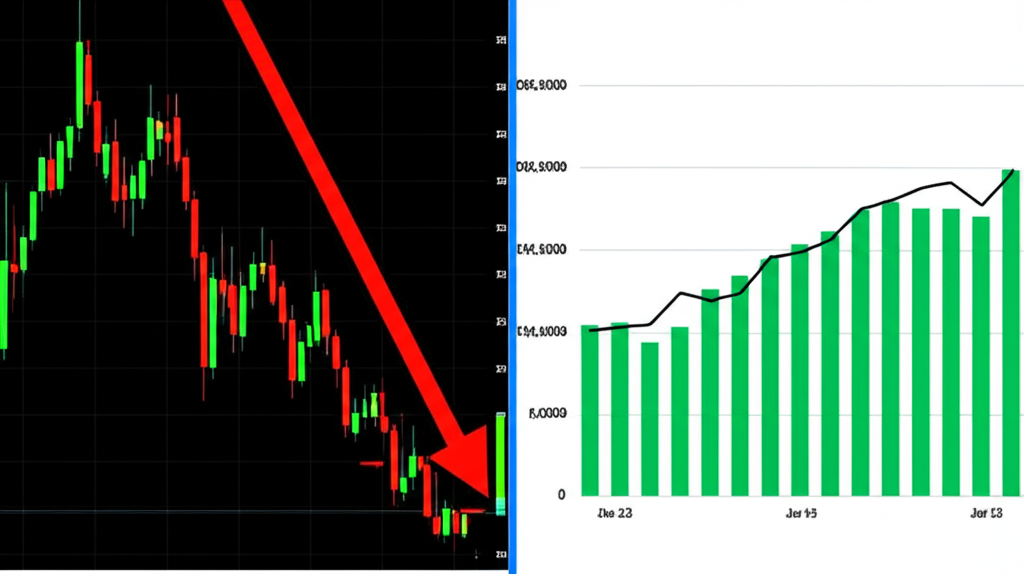
The substantial $1 billion inflow into spot BTC ETFs is a testament to the growing institutional interest in Bitcoin. However, this inflow alone is clearly not enough to overcome the negative pressures exerted by macroeconomic uncertainty and the potential for large-scale selling from dormant wallets. It highlights the complex interplay of factors that influence Bitcoin’s price, showing that even positive developments can be overshadowed by broader market forces.
What Does This Mean for Bitcoin’s Future?
The current situation underscores the volatility inherent in the cryptocurrency market. While the significant ETF inflow demonstrates growing institutional confidence, the price drop emphasizes the importance of considering broader economic conditions and unexpected market events. Predicting the future trajectory of Bitcoin remains challenging, requiring a close monitoring of macroeconomic indicators, on-chain data, and regulatory developments.
Key Takeaways:
- Bitcoin price fell to $107,000 despite a $1 billion inflow into spot BTC ETFs.
- Macroeconomic uncertainty surrounding the US economy is a significant contributing factor.
- Activity in long-dormant Bitcoin wallets, potentially involving billions of dollars, adds to the complexity of the situation.
- The ETF inflow, while positive, was insufficient to counteract the negative pressures.
- The incident highlights Bitcoin’s volatility and the importance of considering multiple factors when assessing its price.